Codepath Alumni Success Panel
Ready to build your tech career?
AI-native engineering courses taught by senior engineers from the companies you want to work at. CS students and CodePath alumni enroll at no cost.
Host Bobby Dorlus brings CodePath alumni on stage to share the paths they took through CodePath programs into their careers, and the advice they would give students following behind them. Recorded at the 2025 Emerging Engineers Summit.
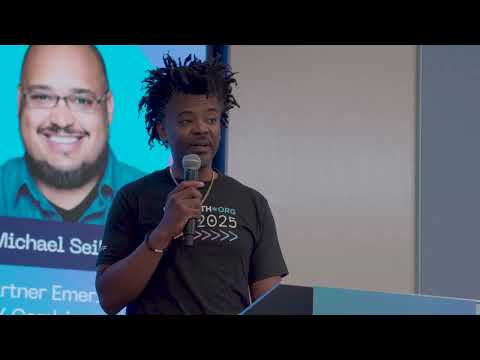
Well, as mentioned yesterday, my name is Bobby Doris, but my friends call me Bobby D. And I’m a technologist, conscious engineer, founder, CEO of the Tech Hustle. But I’m here as your host you all motivated and definitely get ready for panels.
Y’all see them up there? Cut. They’re not nervous.
They’re excited. Alumni actually through code pass programming, but more specifically here to help inspire you, motivate you and giving you a path that you can follow. Can you imagine like you you on a journey and then you walk in and all of a sudden, oh, there’s a pathway there.
Let me walk that way. How how more successful would you be if you had a path in front of you? Right?
So definitely I wanted you all to get prepped up and ready for the conversation that’s going to happen. I’m going to be the the the moderator of the panel. So I’ll definitely make sure I keep it live and keep it going.
But I got some things that I need to read through here and definitely want to First of all, I see everybody got their badges. Give yourselves a round of applause. Let’s get your badges today.
Maybe a few, but not too many. Right. I I brought my badge.
I just don’t have it on, so don’t judge me. All right. So I want to say good morning to everybody and welcome to day number two of the emerging engineering summit.
We had an incredible more or less we had an incredible first day and the second day is going to be even more profit from learning connecting and inspiring but there’s some logistic things that we definitely want to make sure you’re ready for. Number one I mentioned earlier surveys your feedback is by far one of the most valuable things we are looking forward to for events like this but also how we can improve and how we can do better. If y’all want me to pull up, again, you gota fill up the survey and let them know that y’all like my entertainment or at least getting started for the day.
So, definitely feel free to fill out the survey. And then I believe there’s an end of day survey, too. But, we’ll talk about that.
The next thing is, photos. I haven’t seen that many posts. Like, I was walking around talking to everybody.
I mean, y’all not tagging me because I ain’t see it. But I wanted to encourage you all to use social media, but also on the back of your badge, there’s a barcode for you to upload some of the content for us so that we can have it all centralized. And if you are posting on social media, please tag and use the hashes2025.
All right. One thing that we have slight changing our schedule this afternoon is we will be having a group photo, a class photo. So right before lunch, we’re going to have you all bring it up here.
Meet me up on stage. Not on stage. How y’all can get on stage.
It’s not fireproof or the amount of load that we get put on it. But we will be taking a photo before lunch. I do encourage you all to pull up, get yourself in the photo because just imagine when you look back five years from now, you’re looking through the crowd and like, "Oh, that’s a new.
Oh, oh, that’s a Yeah, that’s what we want, right? We definitely want to show some love for you all showing up." So, so pull up right before lunch. The other thing that we have is reviews and mock interviews have been moved to the fifth floor and that kicks off at 2.
All right. There are some slight changes here at the place where we at. So pull up to the fifth floor and we’ll defined up for our second day of conversation.
But the thing before that is I want to hear from anyone what was the thing that you enjoyed the most yesterday? Somebody give me something. What did you enjoy?
You enjoyed me. How many people agree with them? Y’all enjoy me?
Y’all do a few. Yo, give me a round of applause then. I mean, I’m trying to be up on stage all the time.
I only come up on stage when people clap their hand, not not when they just raise their hand. So, disgusting. Anything else?
Anybody enjoy anything else? So, I will say that in my session, Scott, the keynote speaker, inspired me. I was I don’t know if y’all seen what he did on stage.
We will have this all recorded. So I definitely encourage you all to go rewatch. But he inspired me to kind of skip my talk that I did because I actually pulled out the whiteboard and didn’t even look at my slides and you know whiteboarding the whole session.
But the cool thing about that session or opportunities here at Copath is that you’re going to get engagement from engineers that been at the game for a minute and now just these little things like there was two three commands that I I mentioned yesterday on stage. Anybody remember those three commands? Go ahead.
BAT. Yeah. Yeah.
It’s easy, right? BAT was one of those commands, right? It was a better cat.
If you don’t know what CAT is, CAT is a program that allows you to output the contents of a file, like you say, cat file name, which prints to the screen. But he actually had one that was bat and actually had some really cool colors. It had some number lines.
That was actually really cool stuff. And the other commands were comma, right, and period, which are simple commands, but allows you to interact with the AIS even more efficiently, especially if you’re using voice. Voice is my new interface, too.
So, I definitely want to encourage you all to utilize it. Also, I had seen a blog pulled up. Did anybody go to the what was it called?
Goose conversation. Yeah, that was some really cool stuff, right? Goose being a CLI or web interface to access commands or LM I think about computers and LLM is not a new term for me so it’s hard to flow sometimes but is a really cool program I actually use it daily actually use it preferably than code and anything else because I like to be in a terminal I’m one of those old school engineers that used to use VI anybody or still use VI one two vi is like a textbased editor if you already stuck up your game throw away VS code and all those twinkling lines and auto they’ll go down to, you know, the terminal and see if you can hold it down there.
But, it’s definitely one of the skills I encourage my mentees all the time is coding on a blank sheet of paper. I say blank sheet of paper just metaphor, but I want you to code without all the extra tools, right? Because what you’re going to start to develop is the skill around debugging your code.
I don’t know about y’all, but I’m Mr. Typo, right? I used to write code and misspel easy words and then I go run the code and like, oh, let me go fix that. What you all have now which helps us iterate faster.
I get it. It’s a little squiggly line, you know, a little typo or you say what nowadays with AI, you just say even a box string and it just prints out code, right? But I do want to encourage you all to use the foundational tools, the low level stuff just to get familiarized with it, but sharpen your skills because if you didn’t see there was only like four people that raised a hand with VI and you know if you down in VI got much respect, right?
If we’re doing an interview and you pull up VI, I’m like let me and watch. Right. But in general, that’s just some insights or follows from yesterday.
All right. So, we are going to start our conversation with Are you excited for them? Yeah.
I told you I only work off a round of applauses. Are y’all excited for them? Yeah.
Get them hyped up. Get them hyped up. All right.
So, for our day two, we have a very special question. Our CodePath alumni, right? These are folks who have recently stopped right where you are, attended Copath, built up their skills, but figured out their path in tech.
Today, they’re here to share their real world experience, what they wish they’d known when they were in your shoes, and also the advice for navigating early stages of your careers. All right, it says, "This is your chance to hear directly from people who walked the path ahead of you and we for you all pass community can take you there, right? And the other thing I’ll mention, a quick plug, your net worth.
No, no, no. Your network is your right. Your network is your net worth. Right?
Remember, that’s how a community really works. You’re building a community. And if you see anybody you haven’t introduced yourself to today, I want to encourage you all to go and introduce yourself, right?
Because you never know when you might need a job or come in. You never know when I might need a job. So, I definitely want you all to use utilize this community here at Kodath to its full potential.
So, let me start off with the introduction. I’m going to read off their introductions they have here before we have them come up on stage. And the first person that we have is Miguel.
Miguel completed CodePath tip 103 course in the summer of 2022. Now, he’s a software engineer at Alaskan based here in New York City. My bad.
Sorry. He’s he’s a three times founders who built incaled companies without or without external funding and one of which he led a successful exit. In his free time he enjoys solo traveling and dancing salsa.
Next up we have Boris. Now Boris completed two courses with code in software engineering during the summer of 2021 and also the site sit program in the summer of 2024. Forest is a student at Texas University Copus campus.
A copus Christian and has completed his internship at Meta twice and Mercury and will be joining Google this fall. Wow. Right.
In his free time, he enjoys poker, chess, mixed martial arts, and building Legos. Now we have Wendy is also coming up on stage and she completed the CodePath wet 102 course in the spring of 2024. She graduate graduated from Northeastern University in May 2024 and moved to New York City.
She has been working as a software engineer at Microsoft for almost a year and in her free time she’s enjoyed traveling, meeting and learning how to play instruments. If you all can please give them a big round of applause and have them come up on stage. Oh, I love the music.
Y’all over here ding. Appreciate you, DJ. All right.
All right. So, first of all, let’s give them all a round of applause for making it up on stage. One more time.
One more time. That’s the only way I work with round of applause. That’s my currency.
So what we’re going to have is a conversation about their journey so far. But I do want to encourage you all to queue up some questions because we’ll have a chance for you at the audience to ask some questions. But first, go and give us a quick introduction of yourself.
Hello. Thank you, Bobby, for the intro form. Everything is pretty accurate.
Right now I’m working on Instagram reals as an intern. It’s been pretty dope. I like New York.
I’m pleased with Texas. I’m excited to get to talk to all of y’all today. Roger that.
Roger that. Okay. Wendy, go ahead and Hey everyone, you all look so amazing today.
Thank you for coming out. Thanks for the introduction, Bobby. I’m Wendy.
I work at Microsoft. I’ve been working there for over a year now. I hit the year of mark two weeks ago.
Thank you. And I’m so excited to to get to know everyone and to share my experiences. Hey everyone, I’m Miguel.
Thanks for inviting me to this. I’ve been a student for two years now. I hit my two-year mark like a few weeks ago.
And I finally remember doing the technical interview course like in my college room like during my sophomore year. So appreciate you. Definitely.
Definitely. So, first question up and this is going to Wendy, is what motivated you to pursue a career in tech and how did CodePath support you on this journey? Yeah, that’s a that’s a that’s a great question.
A bit of backstory. So, I grew up in Nigeria and I’d always liked the math and the sciences, physics, chemistry, all of that, but I just knew I didn’t want to go premed. And I had other family members in tech and they they talked about how much they had so many opportunities by being a software engineer.
So I remember I then moved to America my freshman year and I took my first computer science class. It was very very new. It wasn’t easy to say the least.
But I remember having such an amazing community at school and also with CodePath. And I remember the first CodePath course I took besides just you know the very knowledgeable instructors and TAs. It was the plot I was in.
It was just a group of four of us. And just Dash’s question just kind of like ranting or like explaining things to each other or debugging really helped my own experience and it really helped me realize that we’re all in this together and it was a path forward for me. So yeah so with more time I interviewed I I had some I got experiences with internships and then I converted full-time to where I am.
Roger that. Roger that. Great great journey and if if one thing that I caught is that community network, right?
Because we all need some type of support. And Boris, next up I have up is what how did you balance copath course work with the responsibilities of school and work if at that time you were working? Sometimes it was tough, I’m not going to lie.
But I think just being honest and being able like okay being able to set like a set schedule was like the biggest thing. So like my Google calendar, I had like every day planned out like breathe at this time like do this and but yeah, so being able to like kind of plan my days fully was like a big thing. Yeah, I also wanted to touch on the last question too because I feel like mine’s a little different.
Like going into college, I had like no experience in tech. I I like knew nobody. I’m the first in my family to like ever go to college.
So I feel like for me, what I got out of like CodePath and code stack and like organizations like this was like more like being able to find like like what am I even supposed to do? Cuz like I I really looked up like what major makes the most money and I was like, "Okay, we’re doing that." and then yeah, so I guess being able to help with like like knowing what I’m supposed to do and like lashing on to people that are smarter than me and like doing what they do, I guess. Just lashing on people.
Martin, you always got to be looking for people that are a little bit higher so that you can have some influence. And Miguel, I want to, you know, give you a chance to answer that same question. So what was it that cop and sorry in terms of motivating you to support your your journey in tech and how to cop?
Yeah, I also started I switched into computer science like the second semester of my sophomore year. So originally it was premed. And I started getting into it just learning how to code and I kind of found out about CodePath and like interviewing all the resources they have like the career summit and getting connected with employers and I was thinking like is this free?
Like this seems like way too good to be true, right? And they’re like extremely helpful like figuring out like what do I exactly need to do like what’s my road map? And just like I think like getting connected to employers was helpful since especially if you don’t go to like a top 10 school or something like that or like an Ivy League especially helpful if you don’t have those connections like beforehand.
Thank you so much for that. Now I don’t know about y’all but I’m trying to get you know work at Microsoft. So Wendy tell us how that interview process and how you actually you know got into Microsoft.
Yeah, it’s so I started off my sophomore summer. I actually heard of the like I did the explore internship which is targeted to underassmen and I heard of it through another org color stack that I’m also a part of. So I interviewed that summer and then I went all the way to Redmond Washington got to meet the team had a great experience and then I returned the previous summer and then I converted full-time.
And I would just say I never expected such, you know, for my first job to be such an amazing company. I never would have expected it. But I think it just goes back to show you the importance of building community.
As much as I was working on an impactful project in Azure storage, I think I made sure my teammates liked me, my me my manager liked me and I was meeting people from cross teams and I was cross collaborating. So those hard skills are very important but also with the soft skills I think allowed me to be seen as a valuable contribution to such an amazing company like Microsoft. After that and is it a Azure, Azure, I don’t know, Microsoft, what do you call it over there?
Whatever you want it to be. I say just write the checks. Now, Boris, let’s talk about your journey over at Instagram.
So, so how did you get there internship and how that all lined up for you? Yeah. So, I started off I didn’t even know what a internship was like the end of my freshman year and like that’s what I coach and coach type things come in.
After that, I learned I was like, "Okay, I got to lock in so I’m not broke." yeah and so basically I think a lot of people don’t talk about there’s so much variance and luck involved in interviewing as well like you can prepare fully but if you’re interview like okay you’re getting like a leard like you’re good like right so yeah so I I applied to like 20 million places I think like it was actually like 200 100 200 something like that and I only heard that like two or three places and one of them meta for the meta university program. And I pressed stuff up and I got it. And then from there, I knew I was interested in ML because like the courses and stuff like that, but that one was like full stack.
And then from there, I interviewed at Mercury, which was super tough because like startups with like debugging interview, stuff like that. But I think also again like I feel like the biggest thing I want people to take away from this is like like learn from people that are one or two years ahead of you and just like copy everything they do. I just like talked to my friends who I interviewed there or whatever and like I was like okay now I know how to cut.
And then for ML I guess like don’t be afraid to put yourself out there. Like I made a lot of projects personally that like help me because I had like no ML experience. I feel like that helped get into it.
And then the interview process, like prep as much as you can, but like then again, like make sure you have a life too, you know, like shouldn’t be the end of the world if you don’t get the offer you want. Like I think I got like four offers and then of those, one of them was Google, so I was like, okay, I’ll take it, right? So like don’t feel bad about like not getting every single offer.
Give him a round of applause. He’s definitely making some moves here, right? Definitely some good insight.
Miguel, you’ve been at it for about 10 years now, so we’re going to take it a little bit back in terms of like when you first started, but what what surprised you the most about when your first year in software engineering? I think the main thing was kind of like learning how to like really plan out a project really well. Because now you’re working in a team, right?
You’re working with stakeholders, customers, the manager of a team. It’s really like up to you to like communicate assertively like what’s expectations and to like align on everything because like there’s I think especially in a big company there’s always a lot of information being thrown around. I think that’s like the main problem a lot of big companies have.
There’s a lot of information, lots of things moving around and being able to like communicate what you’re doing and what the expectations are objectively is like I think the the best thing you can do for yourself. So for me like for like honed in my writing skills and like for me I think I can express things perfectly through like a written document and be able to like communicate that to like everyone on the team. So I think like being able to communicate in one form like whether it’s like speaking presentations or like writing will be like extremely helpful throughout your career because you’re going to be dealing with lots of different people.
Not all of them will always be able to understand the same thing you do like the same way. So being able to really hone in communication skills is super super important. That right there is a gem.
Like as you’re growing in your career, you actually start to go away from the IDE. I used to tell a lot of engineers that are pursuing staff engineers like, "Yo, your new IDE is going to be Google Docs and Poll request, right? That’s all you’re going to be in, right?
Rather than actually the command line." But learning these skill sets early allows you to effectively communicate not just to your team, but external partners as such. So, thank you so much for that, Miguel. Wendy, one thing I have here Where were there any tough moments or things that you wish you known early?
Any things I wish I knew early? I’d say one thing that someone told me. I went to this career something similar to this career prep conference and I was handing my resume out and one thing someone told me was your resume has to be a living breathing document.
There’s no final form of your resume. Even when you get that offer, when you get that internship, that full-time role, you need to be able to assess your skills, what you prioritize, what part of software engineering you want to be in, and how your resume reflects that. I say this because there was one interview I I I did pretty last minute and I had a project I had worked on for a database design class and it was like re-engineer Twitter and it like had what I did in like three bullet points.
I had not looked at that project in god knows how long. And I was going into that interview thinking yeah there’s no chance he’s going to ask me. There’s no way.
That’s the first thing he asked me and I was like, how do I, you know, how do I address this? So, I think just knowing that one, be honest with yourself. I worked on this, but how much can I speak to this?
Because as much as you want to have, you know, that really cool project, you also want to show that you did the work and like you are competent enough. And that’s okay. It’s not the really cool thing that you can speak to.
Just have that you can speak extensively about and that you’re passionate about. I think it’s hard to lie about passion. Passion will ooze through your veins if you are, you know, truthful about that.
So yeah, all in all, have your resume be a reflection of your current state as a student, as an engineer, as a working professional. And of course, the main question is is were there any tough moments or things that you wish you knew earlier? I still go to the I guess praying for what Wendy was saying.
But also I feel like another thing is realizing that recruiters are humans also. I feel like so many people get so scared talking to people. It’s like you just got to realize like they want to help you.
So like give them a reason to want to help you more I guess. You know just be genuine and just talk to them like they’re human. I’ve seen so many times like throwing the resumes in their face and stuff like what you did.
Yeah. I think actually being able even just talk about like them as a person. I feel like you would remember somebody more if you’re like talking about like your interest than if I was like shing my resume in your face.
So I think that’s a big thing that has helped like a ton actually. Yeah. I think that and then pretty much what Wendy said, I was obsessed with my resume.
I would like stay up all night doing it and like it was so bad, but like I feel like it has to be bad. I feel like you have to be bad at something to be good at it. So it’s like you just got to keep working every day.
Yeah. And Miguel, you’ve been at it for a while. So it’s a slightly different question, but what has been one of the the tough or things that you would have like to have learned earlier as you’ve been in the career for two plus years now?
Yeah. I wanted to also chime in to Wendy’s point here. I think one super important skill that’s been really helpful for me is maintaining like learning how to take really good notes for yourself and maintaining your knowledge base, right?
Because you’re since there’s also a lot of information being thrown around, you’re going to miss a lot of little details. So like for example, for like Wendy’s point, like I think keeping notes on it, your accomplishments, what they were, and like a general synopsis of it will be super helpful. Like interviewing talk about stuff like in behavioral interviews but also just like when I’m working I’m like referencing these no like okay like this is what I’ve talked about with this person this is the context of this specific project because there’s always like for me I like use my brain more for like ingesting information and not like memorizing information right because I think that’s a better use for for me personally instead of being able to put all a million things in my head so I like to offload it into my own personal notes and use my brain mainly for like ingesting new stuff and then making connections instead of just remembering everything.
There’s way too much if you just remember you’re going to be thrown at a lot of stuff, right? So like lots of different teams, projects, situations, and you you’re kind of expected to kind of be able to be independent on your own and like be a contributor, right? So it’s very important to have your own personal knowledge basically be able to reference everything and not lose contact.
Yeah. Also, another thing that I remember is like as an intern, that’s like lowkey the like most amount of questions you’re going to be able to ask where like you can ask dumb questions. So, like take advantage of that to be honest.
But like you don’t want to I guess like have handh holding. So, like try to solve things yourself, but don’t be afraid to ask dumb questions. So, maybe like get a couple people so you can balance the dumb questions between them or something.
But yeah, I think definitely leverage that because like once you’re not into ice, I assume it’s a little more expectations are higher, right? I used to tell when you want to chime in. Yeah, I just wanted to chime in.
Yeah, definitely as an intern, you are that’s the best time to ask those dumb questions. Even as a full-time, don’t feel like, you know, day one on the job. You’re going to know everything.
Like I’ve been senior engineers ask me questions. I’ve had my manager ask me questions. But, I think one thing I I do say is like when you ask the question, don’t just ask like, "Oh, like how do I do this?" But was like, "Oh, how do I do this?
I’ve done a and this didn’t work. Could you like, you know, guide me along?" So, it’s not just complete handholding. It’s more like guiding you to the right path.
But questions, it’s gonna it’s going to keep on coming up. It’s inevitable. And you want to be on a team where your questions are are valued and are answered properly.
Yeah. I used to tell my all the time, it’s like, you better read you better have read something before you come and ask a question. Like, you’ve done some some type of and questions are very powerful.
Go ahead. Yeah. So, and like also like on top of like making your own personal knowledge base that can also be used for documentation for your own team.
So, it’s kind of like a killing two birds in one stone, you can have your own references and you’re able to make documentation for the team to make yourself and your team more productive. That’s kind of how you spread your influence throughout the team. Also, I want him on my team.
Did you hear what he said? He said he’s updating documentation. So actually we’re going to stay with you Miguel.
So one thing that I always want to encourage the audience or or you know cohorts or participants in events like this is how different it is from school work versus actual real engineering work like what were those differences in transition? I think with engineering work it the thing that’s really difficult about engineering work is the requirements part like it’s so so important you need to figure out what do you need at the very start of the project or else you’re just going to end up having delays your own deadlines. You have specific timelines you want to follow.
You want to be able to figure that out up front. Because you’re you’re communicating with your team, stakeholders, and all of that. We’re expecting you to deliver this thing, right?
And I think one of the useful things I found with AI nowadays is like, okay, figure out like scan through the code base figure out like, okay, what exactly do I need to change? Make like a quick proof of concept for me and then spit out like a tiny document of like okay how long do you think this will take what exactly do we need to do because some of these code bases are massive right I think AI is really helpful in like searching through what’s already there and being a bit more efficient instead of like writing extra code you don’t really need to write so I think just being able to figure out like okay what exactly like on now I’m thinking of like the road to being a senior engineer of like and now my skill set focus on winning a lot of planning and figuring everything out and you get there and like all the assumptions otherwise you’re going to end up like with delays in the project and some like does that like really get you in the very end so just be careful that yeah that was some really great insights I don’t know if you didn’t hear but he didn’t say you’re doing le code all day right you’re actually doing collaborative engagement and working in a collaborative code base especially the mon repo when tell me a little bit like how much le code are you doing feel today in your job? Zero to none.
I do it’s it’s more like a brain teaser. I have a group chat with some friends that are like, oh, like maybe like once a week, let’s do this for fun. Just to like I don’t know, like keep that side of your brain active.
But there are some similarities in the problem solving you get from Le Code with working your daytoday. One thing I remember CodePath really helped me with, I took the interview prep course and within the first few weeks they talked about this umpire framework that was just a way to like you know answer the le code questions and that’s not just le code specific I think it’s just problem solving in general and it just helps you follow a more like stepbystep strategic approach to things. So you could be that type of person that you know you want you’re a hobby.
You want to code, go ahead. But it’s not something you have to do on your dayto-day. I think like we’ve mentioned all around today is it’s more communication and collaboration and also just working with people and understanding the requirements.
When you’re working on a project, no one tells you very concisely, I want this. It’s more of a conversation. Okay?
If if A happens, what behavior do you want? If B happens, what behavior do you want? You kind you kind of need to go back and forth and then when you have that you then begin the process but it’s it’s not just a one and done.
It’s it’s it’s very iterative. Things will change. Customers will change their mind a bunch of times and you just you know you kind of know that’s just the name of the game.
It’s it’s very fast. It’s very dynamic. So you kind of want to be able to to shift and kind of morph with that and work with with your team speed and work with your stakeholders and your product managers and the customers.
Some weeks are busier, some weeks are slower. And you you kind of just adapt. I think adaptability is is one big skill that I’ve been learning.
I’ve been work as I’ve been working for about a year now. And that’s something that is kind of different in school because at school you have, you know, assignment A, you’re doing this. And then assignment B is something else.
With working, it’s like, okay, remember that thing from a year ago? Well, you’re going to need it today. You forgot.
Well, you have to go back and kind of like look at what you did. Which goes back to having great documentation. So, I say adaptability is something that is a skill that you just keep on honing on and you keep on improving.
One on my team, too. She said documentation. That’s all you need to say to me and you get hired.
Documentation. You see that right? I want to ask you the same similar question is like what skills and knowledge from CodePath have made the most value for your dayto-day.
I feel like the underrated part is like the breakout rooms. I feel like being able to like talk to new people is way more scary than like I guess about the same like talking to a manager and stuff like that. So I think that and like actually being able to like like kind of break down who’s doing what and like kind of work as a team.
It’s kind of like mini preparing you for that I would say kind of direct the way. I think CodePath especially was like I was not very disciplined in doing like le code prep. So I was like having something that’s like kind of structured and and able to okay at this time I’m doing this because I have that.
So I think that was a big thing for me and then also like connections you make from it you know that’s a big thing like for me it was like okay do you want to do like more practice maybe you know so I think that’s a big thing is like making connections because it’s way easier to stick to something if you have someone like texting like yo are we still going to do that tonight like stuff and just like relying on yourself because then you be like h I’ll do it tomorrow it’s fine no biggy that’s the main Yeah, accountability is always great and as you’re going through your career, you always want to find those accountability partners. Go ahead. Yeah.
Also, the thing about trying structured part like sometimes you’re not really given structure. So, sometimes it’ll be up to you to create your own structure. Like if you make the writing stupid, easy to do, like you will be successful.
So kind of just like making that environment for yourself. I think this was something I learned like a year in of like, okay, I need to figure out my own processes and how the way I like to operate and kind of just how to make that as easy as possible. Yeah.
And we’re going to stay with you, Miguel, because one of the things that I I want to encourage you all is definitely falling in love with learning is what I tell my mentees all the time. Right. So, Miguel, how how do you continue to learn, grow, and stay motivated in this field of engineering?
A lot of YouTube. I love like watching videos. So, like Fire, you know, like all those like classic YouTubers I watch a lot of that.
I feel like Twitter is also like pretty up to date in terms of it’s called I don’t like calling it X. I don’t know. Sorry, keep going.
But I feel like usually like X or Twitter like they’re pretty up to date in like what’s going on in the frontier. So like they’re kind of go around tech Twitter. That’s where I get my main sources of information.
I don’t know if I mentioned that that I did work at Twitter for a good minute when it was Twitter, not text. That’s why it kind of it burns a little bit when I hear it. But also, yes, we were the platform that you went to to get late and trended news and all that good stuff.
But thank you so much for correcting that. And also to you, Wendy, like in terms of you want to ask for something. I feel like like that like YouTube, Twitter, a lot of that usually you do when you’re like passionate about it and like you don’t have to be passionate about tech, but it helps.
So much. So like one thing that was some advice that I was given was like you don’t have to be passionate about tech but find what you’re passionate about and see how tech can align with that in a way and that way like kind of helps you to like want to do it right. Yeah.
And make algorithms work for you. If you guess what keep watching these tech videos, what is algorithm going to do? Keep giving you more of that, right?
So take advantage of this this algorithm and make it work for you for sure. So the next question that I have is for Wendy here is what’s a common misconception about working in tech? Common misconception.
There’s so many what to pick from. I’d say one is your day isn’t all just about writing code. We’ve talked about communication, but also reading code and reading leg like really old legacy code and you’re just like, who wrote this?
Find them. Tell them to come back. Like it’s it’s writing code is definitely part of it, but it’s also like reading reviews, communication, explaining your side of things because there’s so many approaches to a problem, but you want to be able to be assertive and and have the facts to why you’re approached makes the most sense.
So just advocating for yourself as well. And also on a grander scheme of things when like conversations for promotions come up and for like you know performance evaluations you’re your biggest advocate. It’s yes you can come and say like these are the metrics these are the success numbers but you also want to sit and say hey I did ABC and I did XYZ.
So you really want to be able to to speak for yourself and you also want to have people that can speak for you as well right? So your mentor is the person that can speak for you other people other teams have seen your work, friends at the company as well. So yes, you’re a software engineer, but there’s so many other skills that go into it and there’s so many other things that you will like you might have as you come in, but you will learn on the dayto-day for sure.
Yeah, there’s a gym there. I don’t know if you’ve ever heard of a brag doc. You ever heard of that before?
Right. It’s a document team that you basically brag about the work you’ve done. But the most powerful time that you need to brag about doc is when it’s promotion time, right?
Or when you get a new manager, imagine you have a new manager. I don’t know none of the hustle, right? And you have a doc that you can actually speak on and also share with them.
So, thank you so much for that. U definitely want to follow up with that same question for you is like what is like some misconceptions that you’ve experienced? Yeah, misconceptions.
I think the same thing about like being able to advocate for yourself like is super important. Because like honestly it’s not your manager’s job to know what exactly you’re doing with the dayto-day looks like, right? That’s why I’m talking about like the note takingaking stuff like have everything written down so your manager doesn’t know what exactly you’ve been doing.
Because their job is kind of like to deal with all the like the politics all like the corporate politics and all of that. Misconceptions I think like one of the things is just like yeah, I guess like what kind of I had to learn like a year later like into my first job is just like man how much writing I actually like really needed to do in order to be like super productive. That’s why I kind of talked about the points of like building your own knowledge base.
It’s just like so much that goes on. It’s impossible to keep track of everything like have single little thing you do write them down like and especially my bra documents I even put Slack messages on there I’m like screenshot and I’m like I’m going to be using that yeah so I used to do the same thing is so even even when you get higher in the stack you still need to maintain a brag right and I used to have Slack conversations mentoring you know newer engineers and I used to take a screenshot of that like oh I’m gonna need this one day for sure Boris one one thing that I want to give you a chance to jump into How did you secure this new opportunity you have coming up soon with Google? Yeah, so again I think a big part of that is like people I know that have like worked at Google is like me like oh I want to work at Google so like how do you do it?
Things like that. So I mean just applying again it’s like super luck based like I feel like I talked to some friends I was like how was the interview for you and they got like code hard and I was like I was okay. 21 And older.
I was like, "Oh, well, I got like a super easy question in comparison." So like I feel like sometimes it’s like you have to be lucky and like there’s nothing wrong with that. But also keep in mind that you like make your own luck by preparing, right? So like also be aware of that.
And I feel like I wanted to touch on kind of what they’re saying like the misconceptions. I feel like one thing is that like a lot of people know everything when they go into working and it’s not really the case. I know there’s like a lot of imposttor syndrome and I feel like something that I was told that helped me a lot was like they don’t hire you to know everything.
They hire you because they think you can figure it out. So I think that was something that like stuck with me and helped me a lot. Yeah, Google excited for that.
Going to be on Mountain View next semester. I don’t know about y’all. So, I have a question for the three of you all.
But I do want you all to get ready to ask your own questions. So, definitely get it queued up. How do you know if the three of you broke something since you worked there?
Anybody can jump in. Oh, last week. Yeah, I broke one of my preachers in production broke and then so I got like a phone call.
And so that’s one other thing. Taking ownership of your own work. Like if you’re expected to deliver a project, you’re kind of also expecting to maintain it.
And so I think that’s also like one thing that also took me by surprise is like, okay, like here here’s like a stamp of your own work like in production, like what people are seeing. And being able to really go over and like, okay, like this is what I did. And that’s why, as I said, taking good notes of what you did because like sometimes you won’t like week from whenever you ship like the pieces of code or whatever, you won’t be able to remember it, right?
So, just always having something of like jumping being able to jump back in and be able to debug quickly was like super helpful. And so that’s like saved my butt so many times with work like not even funny. Anybody else?
I was breaking things all the time. I basically broke something. But I because Microsoft is such a big company, security is a major priority in everything we do.
And they they tell us have like a security first approach because there’s so many bad actors. And I accidentally leaked one of our secrets. And my manager, he’s I think that’s another thing you even though you’re like interviewing with these companies, you’re also interviewing with the teams.
My manager, he’s a very reasonable person and he realized like I didn’t intentionally leak the secret. And it was just a conversation of like, hey, these are this team security practices and like things we do. I know you’re still new here and you’re still like trying to figure things out, but like this is what we do and owning up to it and like not saying like, "Hey, I didn’t do it." Like just admitting when you’ve made some mistakes and you want to be teachable because you’re not going to know everything and there’s always going to be a new techn something is going to come out and you’re not going to know.
You’re not going to be in school to like learn all those things. So, you want to be able to be a sponge and when times are necessary, like take a step back and realize, okay, I goofed on this. How can I move forward?
Right? It’s not going to help to, you know, be sad about everything all day. Things will break.
Things go down. That’s the name of the game. And it’s scary the first time it happens, but the more it happens, the more time you see it happen to other people, happen to yourself, you realize that it’s not personal and no one’s like pointing fingers.
It’s not like, oh, Wendy made a mistake. It was like a team effort. Let’s make our documentation better.
Let’s make onboarding better. Let’s, you know, simplify these processes to like these mistakes don’t happen in the future. That’s what’s up.
I I like the fact that the way that she described it was the team that made a mistake rather than individual. Because it’s such a supporting an opportunity to be very supportive on those. And the only one word that I always like to emphasize with my mentee is integrity.
Like if if something breaks, you have to let people know, right? Don’t think that the hole deeper by yourself if you end up being down there by yourself. All right, so we’re queuing up some questions here.
If anyone has in the audience a question, feel free to raise your hand. Give us your name. My name is Britney.
Could I ask a question to Boris and Wendy? Of course. Okay.
So, my question to Boris was you mentioned that you did some ML projects. What’s the initial ML project that someone with minimal coding experience could do and then my question to Wendy was you mentioned like looking at bad code. How did you learn what good code is and do you have any resources to like make sure you write good code when you get into a position?
I love those questions. For mine, I feel like a big part of it is like when you start, you’re not going to be good, right? So, I think like way I approached it, at least for me, what what helped me was like doing like YouTube tutorials and then from there like expanding on it afterwards.
So, like, okay, you do the tutorial, but then you don’t just leave it at that because I feel like it’s super easy to just like follow line by line code follow the code of like what it’s supposed to do and you’re not really like pushing yourself. Like, okay, yeah, it’s fine to have a starting like base to go off of, but then try to push it further. And also, it’s a little easier that way.
It’s like, okay, you have this main thing. It’s like, okay, now you’re building something. And then eventually, you’ll kind of progress to where it’s like, okay, now I’m building a bigger thing or like now I’m building the whole project.
And so, like kind of just being able to take baby steps in that sense because like if you’re trying to build like PGBT again, I don’t know, like you know, like it’s like you don’t want to overwhelm yourself, I feel like, and you want to make it fun. So if you’re like you’re not having fun, you’re not going to stick with it, I feel like. So like that’s the thing that’s worked for me.
Also hackathons like being able to stick with it is super hard. So if you can just like you can commit like 24 hours like whatever how many time how much time is like hackathons is like lowkey the main project I wanted to make. So I was like okay I’m just gonna do it have fun and get it done.
Yeah that’s a that’s a great question. I think like coding it’s it’s a natural language. So like treat it like French, Spanish, any other language.
So the more you practice, the more you see it, the more you read it, the better you get at it. But specifically speaking to bad code, I think it’s it’s team dependent. So when you first join as an intern, full-time, whatever, just ask what are the coding practices?
Like how do we name variables? Like like what do we do? And again, being a sponge, so you’re not going to understand understand everything the first day at the snap of your fingers.
But the more code you see, the more code you read and you try to understand, it’s easier to identify when things could be better. Another thing is always aim for simplicity. I think some like you’re not the only person reading your code.
Someone else is going to look at it five years from now, 10 years from now, and you’re not going to be you’re not going to, you know, walk them through line by line. So, just have that perspective in mind when you’re coding like, "Hey, can someone else who doesn’t have the most knowledge of this language pick up what I’m trying to do?" and I see that on my own team as well where like I see like some like very like spaghetti like things that are just too too complex and I’m like, "Hey, like this could have been so much simpler." And when you increase complexity, I feel like you can then introduce bugs and other things. So so really aim for simplicity but also everything is is team specific.
So when you join a team it’s like you’re joining that family and you behave as they do like when in Rome speak like act as a Roman. So you you really will pick up you know like just look around be a sponge and you understand what your team’s conventions are and things like that. Yeah.
So coming in here I think when I’m given a task sometimes I’m like oh like when it comes Like sometimes I’m thinking like why is this harder than what it needs to be? That’s kind of when I figure out like oh there’s usually a bigger problem at hand. So sometimes it’s like coaching it should be easy but if they aren’t there’s probably usually a bigger problem in the codebase or something’s not functioning correctly that should be semantic wise.
Roger that. Roger that. Google style guide is another great resource that I always encourage you all to review.
Multiple code bases there definitely something we follow and open source based. All right one more question. We got time for one more question on the left hand side there.
Hi, I’m Anan. I had a question that’s open to whoever want to answer. You spoke extensively about how, you know, there were changes from going from school to now working and how you like things and learn things along the way.
I wanted to know was there some habits or mindset that you had while you were in school that you had to unlearn while going to the workforce and something that you had to maybe that you realize that maybe something that you didn’t really prioritize while you were at school which you should prioritize now that you’re in the workforce. I can take a stab at that first. From school to working, what’s the mindsets that I had in mind?
I’d say one thing was, you know, we’re all so busy. We have so many like classes and homework and assignments. Sometimes I was racing against the clock to turn something in and it’s like 11:50, 8:50, like the last last second I turn it in and I’m just like, you know what?
I just need something in You don’t want to have that mindset of let me just get this done and close that book and move on because it will come to bite you in the foot. It will it will be a problem later on. So I think one thing I one thing that working really tells you is if you need an extra day to make this production ready for like you and I to use for customers to use to to make it work you can get that extra day rather than turning in you know a halfass job that’s going to break if someone just like tries to use it for a second.
Yeah, I think one thing is like you’re going to feel stupid a lot of the times. Because there’s just so much going on, right? Basically like years of context you don’t know behind some of the things you’re working on.
So sometimes you’re going to be like, "Oh man, I don’t feel great about like my own like capacity sometimes, but that’s kind of to be expected because it’s impossible. Like these these things were like built on years with projects. You don’t know.
So just take things step step by step really." Roger that. Let’s give them a round of applause here. I want to say thank thank the panelists.
This is your currency. The round one more time and they said they want to get paid again. One more time.
There we go. All right. We are closing out our session here and moving on into our breakout session.
One note, we are going to have our closing session at 12:30. So we definitely want to have you all come back down here. And if you have any questions or need any help, look for someone that has a code shirt.
Thank you all so much for showing up to our second day of the engineering summit. Hope you have a good day.